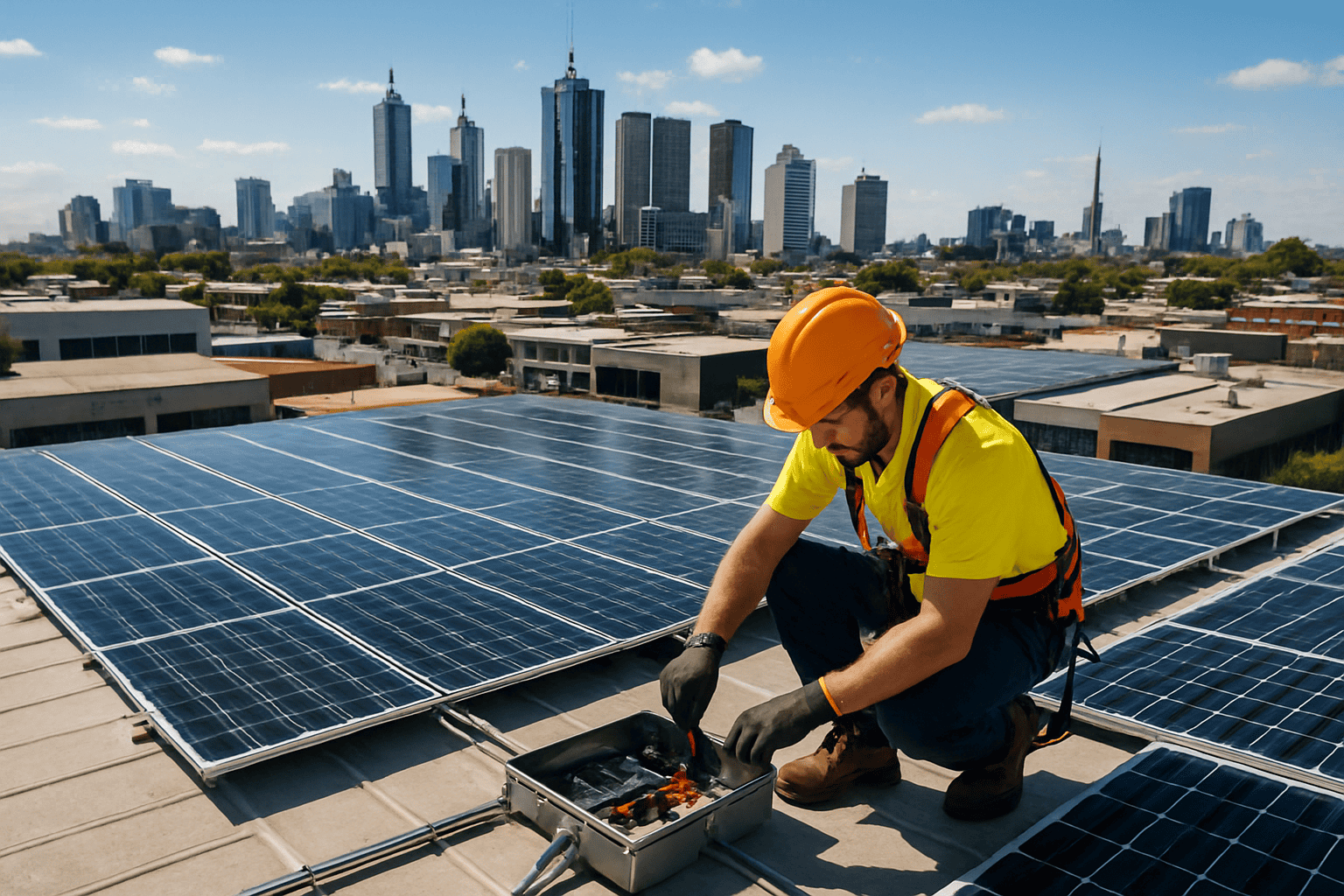
Commercial Solar Melbourne Electrician: Your Essential Guide to Electrical Requirements for Commercial Solar Panel Installation in Melbourne
In today’s business landscape, energy costs are a significant factor that can profoundly impact your bottom line. As a small business owner in Melbourne, turning towards renewable energy—specifically commercial solar panel installation—is not just environmentally friendly but also a smart financial strategy. However, navigating the complex electrical requirements and local regulations can be daunting without the right expertise. This article is designed to be your comprehensive guide, offering valuable insights into the electrical aspects of commercial solar installations in Melbourne while highlighting the role of experienced Melbourne solar electricians in ensuring a smooth, compliant, and efficient installation.
In this guide, we’ll delve into the electrical requirements for commercial solar panel installations, break down relevant benefits and features, and provide practical tips on how to find the right electrician who understands local codes, regulations, and best practices. Whether you’re evaluating the opportunity for cost savings, sustainability incentives, or trying to increase your commercial property’s value, this resource will arm you with the information you need to make informed decisions.
Why Commercial Solar Panel Installation is Vital for Melbourne Businesses
In the ever-changing energy market, commercial solar panel installations offer a compelling opportunity for business owners to manage energy costs while also contributing to environmental sustainability.
The Rising Cost of Energy
Energy prices in Australia, including Melbourne, are increasing due to a variety of global market and local regulatory factors. For small businesses, uncertain energy bills create a strain on regular operations. By installing commercial solar panels, you can harness the power of the sun to generate clean, reliable electricity, helping to offset your energy costs and reduce your carbon footprint.
Sustainability and Corporate Social Responsibility
Adopting solar energy is not only a cost-saving measure but also a commitment to sustainability—a value increasingly appreciated by customers and partners alike. Businesses that prioritize renewable energy often enjoy enhanced brand reputation, improved customer loyalty, and sometimes even preferential treatment in government contracting processes due to green initiatives.
Government Incentives and Rebates
Melbourne business owners have access to various government rebates and incentives designed to promote renewable energy. These programs are often linked to commercial solar panel efficiency, installation merits, and proper adherence to electrical standards. Moreover, initiatives like feed-in tariffs in Melbourne provide additional financial benefits for surplus energy fed back into the grid.
Resilience and Energy Independence
With a commercial solar power system in place, your business can attain greater energy independence. This resilience is particularly valuable in the face of potential power outages or fluctuations in grid supply. Strategic solar installations can safeguard your operations and keep business functioning smoothly even during grid disturbances.
Given these benefits, investing in a commercial solar installation in Melbourne isn’t just an environmentally conscious decision—it’s a strategic business imperative. However, harnessing these benefits requires more than just purchasing panels. The electrical requirements, system integration, and compliance with Melbourne’s stringent safety and building codes are pivotal to ensuring that your solar system performs reliably and legally.
Understanding the Electrical Requirements for Commercial Solar Panels
Before you install a commercial solar panel system, it’s essential to understand the electrical requirements and how they fit within the broader scope of your building’s electrical infrastructure. A failure to adhere to these requirements can result in inefficient energy production, safety hazards, and potential legal repercussions.
System Sizing and Load Assessment
The process begins with a thorough evaluation of your building’s current electrical load. It’s important to understand the following:
- Existing Electrical Capacity: Assess your current electrical panels and switchboard to determine whether they can handle additional loads from the solar installation.
- Load Demand Analysis: Analyze your business energy consumption patterns to determine the optimal size of the solar array.
- Upsizing Considerations: In some cases, you might need to upgrade your building’s wiring or switchboard to accommodate the increased load of solar power generation. This ensures that the grid connection is stable, effective, and safe.
Commercial Solar Wiring and Connections
Connecting commercial solar panels involves several key electrical aspects:
- Interconnection Standards: When connecting your solar array to the building’s electrical system, components such as inverters, wiring, and switchboards must meet specific standards to ensure safety and efficiency.
- DC to AC Conversion: Commercial solar panels produce direct current (DC), which must be converted to alternating current (AC) using commercial solar inverters. These inverters must comply with electrical standards and local codes.
- Circuit Protection: Proper circuit protection is essential. This includes installing solar panel circuit breakers and surge protectors to safeguard both the building’s electrical system and the solar installation.
Electrical Certification and Safety Standards
Before commissioning the solar installation, ensure all electrical work is properly certified. This certification indicates that the installation complies with both national and local safety standards. Key aspects include:
- Compliance with Australian Standards (AS/NZS): These standards set out the minimum safety and performance requirements for electrical installations in Australia.
- Electrical Certificate of Compliance (EIC): After the installation is complete, a licensed Melbourne solar electrician must inspect and certify the electrical components and installations.
- Fire Safety Standards: Ensure that the installation not only meets electrical codes but also adheres to fire safety requirements to prevent hazards in high-risk environments.
Integration with Grid Connection
Integrating your commercial solar system with the local grid in Melbourne involves certain electrical requirements:
- Grid-Tie Inverters: These devices synchronize your solar energy system with the grid frequency, ensuring a seamless transition between self-generated and grid power.
- Feed-in Tariff Systems: For surplus energy production, your system needs proper metering and digital configuration to take advantage of Melbourne’s solar feed-in tariff programs.
- Switchboard Upgrades: In many cases, incorporating a commercial solar system will require the installation of an additional metering system or an upgrade to your building’s existing switchboard. This upgrade must be performed by a licensed electrician to ensure compliance with both safety and regulatory codes.
Understanding these electrical requirements is the first step toward a successful commercial solar installation. By addressing these needs early on, you can ensure your system is safe, efficient, and fully compliant with local regulations.
Key Features and Benefits of Commercial Solar Electrical Systems
When contemplating a commercial solar installation in Melbourne, it’s important to understand the features and benefits of a properly integrated solar electrical system. Not only does a well-designed system ensure optimal energy production, but it also enhances overall operational efficiency and electrical safety.
Enhanced Energy Efficiency
One of the most significant benefits of a commercial solar power system is the potential to reduce energy bills substantially. By harnessing the power of the sun, your business can lower its dependence on conventional grid power, leading to long-term cost savings.
- Reduced monthly energy bills
- Lower operating costs for business operations
- Increased energy yield through proper system alignment and inverter performance
Increased Building Value and ROI
A commercial solar installation can boost the value of your property. Energy-efficient commercial properties are highly appealing to prospective buyers and tenants.
- Improved property marketability
- Attractive return on investment (ROI) over the system’s lifetime
- Eligibility for government rebates, tax benefits, and solar-specific financial incentives
Safety and Reliability
Incorporating advanced circuit protection, quality wiring, and certified installation methods helps safeguard your business. A properly installed system minimizes the risk of electrical faults or fire hazards.
- Enhanced system safety with professional-grade electrical components
- Compliance with stringent Australian safety standards
- Reduced risk of downtime due to power quality issues
Scalability and Future-proofing
A well-designed solar system not only meets your current needs but can be scaled up as your energy requirements grow. Modern commercial solar systems allow for easy integration with future technologies.
- Flexibility to add batteries or expand the system as your business grows
- Future integration with smart energy management systems and renewable energy sources
- Long-term viability even as energy demands evolve
Environmental Impact
Solar energy is one of the most sustainable forms of power, reducing greenhouse gas emissions and lowering your environmental footprint.
- Contribution to carbon footprint reduction
- Enhanced corporate social responsibility (CSR)
- Positive public image and stronger customer loyalty
Technical Advantages
Commercial solar installations come with a range of technical benefits that ensure optimal performance across all operational conditions.
- High-quality converters, such as commercial solar inverters, that ensure efficient DC-to-AC conversion
- Advanced monitoring systems that allow for real-time performance tracking of your solar array
- Durable and resilient equipment designed to withstand Melbourne’s varying weather conditions
Understanding these features and benefits provides a strong foundation for making informed decisions about investing in commercial solar panel installations. Working with experienced Melbourne solar electricians ensures that your system is not only efficient but also robust, safe, and future-proof.
Local Regulations, Codes, and Safety Standards in Melbourne
Adhering to local regulations and safety standards is crucial for any commercial solar installation in Melbourne. Failing to follow these requirements not only compromises safety but may also result in fines, delays, or even force you to redo parts of your installation.
Melbourne and Australian Standards for Commercial Solar Installations
In Melbourne, commercial solar installations must comply with several key standards and codes:
- AS/NZS 5033 – Installation and Safety Requirements: This standard specifically addresses the installation, connection, and testing of photovoltaic (PV) arrays. It ensures that all installations in Australia meet rigorous safety requirements.
- AS/NZS 3000 – Wiring Rules: Known as the Australian/New Zealand Wiring Rules, this code establishes electrical safety and installation practices that must be adhered to by all commercial electrical systems.
- AS/NZS 4777 – Grid Connection: This standard outlines the requirements for connecting energy systems to the grid, ensuring that inverters and other components operate safely alongside the local electricity network.
- Local Council Regulations: Different municipalities in Melbourne may have additional requirements or permits that are necessary prior to commencing a commercial solar project. It’s important to consult with local authorities to secure the required permits.
Licensing and Certification for Commercial Solar Electricians
For your installation to be safe and compliant, hiring a licensed, experienced solar electrician in Melbourne is imperative. Look for these credentials:
- Electrical Contractor License: Confirm that your commercial solar electrician holds an appropriate license issued by the Victorian Building Authority.
- Certified Experience in Renewable Installations: Since solar installations have unique requirements, your chosen contractor should have significant experience with commercial photovoltaic systems and related certifications.
- Insurance and Warranty: Ensure that the electrician offers adequate insurance and warranties on their workmanship and the equipment used.
Safety Procedures and Best Practices
Adhering to safety standards during installation is vital for preventing accidents, particularly in commercial environments where electrical faults can have severe consequences. Here are some best practices:
- Pre-installation Risk Assessments: A thorough risk assessment should be conducted before beginning installation to identify all potential hazards.
- Isolation and Lockout Procedures: During any electrical work, ensure that proper isolation and lockout procedures are in place to prevent accidental energization.
- Regular Inspections and Maintenance: Once installed, schedule regular inspections and maintenance sessions to ensure continued compliance with Melbourne’s stringent standards.
- Worker Safety Training: Ensure all personnel involved in the installation are adequately trained in both electrical safety and the specific requirements of commercial solar installations.
Environmental and Building Considerations
Local building codes and environmental guidelines also play a role in the installation process:
- Building Structural Integrity: Before installation, verify that the building’s roof or mounting area can support the weight and configuration of the commercial solar panels.
- Environmental Permits: In some cases, environmental impact studies or permits might be required, particularly if the installation is near heritage sites or environmentally sensitive areas.
- Noise and Visual Impact: While solar panels are generally unobtrusive, any auxiliary equipment, such as inverters, might require careful placement to minimize noise and visual impact, particularly in urban settings.
By understanding and adhering to these standards and regulations, you not only safeguard your business but also contribute positively to Melbourne’s drive towards sustainable energy solutions.
How to Select the Right Commercial Solar Electrician in Melbourne
Finding the right professional to handle your commercial solar installation is crucial. A qualified and experienced Melbourne solar electrician can ensure that your project is completed to the highest standards, on time, and within budget. Here are some practical tips to guide you in selecting the right contractor:
Do Your Research
- Local Experience Matters: Look for electricians who have extensive experience specifically in commercial solar installations within Melbourne. Their familiarity with local regulations and environmental conditions is invaluable.
- Check Reviews and Testimonials: Online reviews, case studies, and word-of-mouth recommendations from other business owners can give you a clear picture of the electrician’s reliability and expertise.
- Portfolio of Past Projects: Ask for examples of completed projects similar in scale and complexity to yours. This will help you gauge their technical capabilities and design quality.
Verify Credentials
- Licenses and Certifications: Confirm that the prospective electrician holds all necessary credentials, including a current electrical contractor license and certificates for renewable energy installations.
- Insurance Coverage: Ensure that they have comprehensive insurance coverage. This protects you against any potential damages or liabilities during the project.
- Ongoing Training: The renewable energy field is dynamic. An electrician who engages in continual training is more likely to stay updated with the latest technologies and regulatory changes.
Get Multiple Quotes
- Detailed Estimates: Solicit detailed quotes from multiple contractors. A transparent estimate should outline all costs, including equipment, installation, permits, and inspections.
- Comparison of Services: Beyond cost, compare the range of services offered. Some electricians provide full project management—from initial consultation and design to installation and maintenance—which can be highly beneficial.
- After-sales Support: Inquire about after-installation support and maintenance packages. A reliable commercial solar electrician will offer comprehensive support to ensure the system remains efficient over its lifespan.
Ask the Right Questions
Here are some questions to ask potential contractors:
- How experienced are you with commercial solar panel installations in Melbourne?
- Can you walk me through the process, from initial assessment to final certification?
- How do you ensure that all electrical work complies with local and national codes?
- What kind of warranties and maintenance packages do you offer?
- How do you handle unexpected issues or delays during the installation process?
By taking the time to thoroughly evaluate your options, you can significantly reduce the risk of run-ins with subpar work and ensure that your solar project is in the hands of true professionals.
Practical Installation Tips and Best Practices
While your chosen commercial solar electrician will handle much of the technical work, there are several practical steps you can take as a business owner to ensure that the project runs smoothly and meets your expectations.
Pre-Installation Preparation
- Conduct an Energy Audit: Prior to installation, have a professional energy audit performed. This will help determine your current energy usage and the optimal size for your commercial solar system.
- Engage Stakeholders: If your business involves multiple departments or managers, gather insights and concerns early on. Making sure everyone is on board can prevent disruptions later.
- Site Assessment: Ensure that the installation site is accessible and that any obstacles (e.g., structural limitations, existing wiring) are identified. A thorough site assessment can help tailor the installation to your specific needs.
- Budgeting and Financing: Plan your budget well in advance. Consider the available commercial solar rebates in Melbourne, government incentives, and potential financing options to make your investment more manageable.
During Installation
- Clear Communication: Maintain regular communication with your contractor. Daily or weekly check-ins can help ensure that the project is on schedule and that any concerns are addressed promptly.
- Safety Protocols: Work closely with your electrician to enforce site safety protocols. For instance, designated areas should be marked for hazardous zones, and any work requiring high voltage should be clearly communicated to all personnel on site.
- Monitor Progress: If possible, have your team or a project manager monitor the installation process. This oversight can help ensure that the project stays true to the planned specifications and that any discrepancies are quickly corrected.
- Prepare for Minor Disruptions: Understand that electrical upgrades or rewiring might cause temporary disruptions. Prepare your business schedule to minimize the impact on operations.
Post-Installation Process
- Commissioning and Testing: Once the installation is complete, ensure that the system is thoroughly tested by a licensed professional. Testing should include assessing the integrity of the electrical connections, verifying inverter functionality, and confirming that the system complies with all safety standards.
- Training and Documentation: Request comprehensive documentation from your contractor, including maintenance manuals, warranty information, and detailed electrical certifications. Additionally, training sessions for your operations team can be a valuable asset for routine troubleshooting.
- Scheduled Maintenance: Solar panels and associated equipment need regular maintenance to sustain efficiency. Establish a maintenance schedule with your electrician to periodically inspect panels, wiring, and inverters.
- Performance Monitoring: Leverage commercial solar monitoring systems to keep track of real-time performance. This can help quickly identify any issues and ensure that your system is maximizing energy production.
By following these practical tips, you create a robust framework for the installation process—one that emphasizes safety, efficiency, and long-term performance.
Maximizing ROI and Future-Proofing Your Solar Investment
Investing in commercial solar not only reduces your operational costs but also increases the value of your business. However, ensuring a high return on investment (ROI) demands careful planning and execution.
Understanding the Financial Benefits
- Lower Electricity Bills: The primary benefit of solar is the reduction in reliance on traditional grid power. Over time, the savings in electricity bills can accumulate significantly.
- Government Incentives: Take full advantage of Melbourne’s commercial solar rebates and feed-in tariffs. These incentives can substantially lower the upfront costs and accelerate ROI.
- Increased Property Value: A commercial property equipped with an energy-efficient solar power system is more attractive to investors and tenants, contributing to higher property values and marketability.
Future-Proofing Your System
- Scalable Design: As your business grows, your energy demands might increase. Design your solar system with scalability in mind. Discuss with your electrician about options for adding extra capacity or integrating battery storage systems in the future.
- Smart Monitoring Systems: Incorporate advanced performance monitoring systems that not only track energy production but also provide predictive maintenance alerts. This proactive approach minimizes downtime and ensures sustained efficiency.
- Integration with Other Technologies: Solar energy systems today can integrate with emerging technologies like energy management software, smart grids, and even electric vehicle charging stations. Plan ahead to ensure your installation can evolve with technological advancements.
- Regular Upgrades: Stay informed about improvements in solar panel efficiency and inverter technology. Periodically, consult with your contractor about potential upgrades that can further enhance your system’s performance.
Environmental and Community Benefits
- Carbon Reduction: By generating renewable energy, your business contributes to significant carbon emissions reduction. This not only benefits the environment but also positions your business as a leader in corporate social responsibility.
- Community Engagement: Consider showcasing your commercial solar installation as part of your business’s sustainability story. This transparency can boost your brand image and inspire local initiatives toward renewable energy.
By focusing on these strategies, you can ensure that your commercial solar installation not only meets current energy needs but also remains an asset that grows in value and functionality over time.
Real-world Case Studies and Success Stories
To bring the discussion to life, let’s look at some real-world examples of how Melbourne businesses have successfully implemented commercial solar panel installations with the guidance of expert solar electricians.
Case Study 1: Retail Hub in the CBD
A bustling retail hub in Melbourne’s CBD partnered with a well-reputed commercial solar contractor to retrofit their rooftop with solar panels. Facing high energy bills and a growing customer base concerned about sustainability, the business decided to invest in a scalable solar array.
Key outcomes:
- The project resulted in a 30% reduction in monthly electricity costs.
- The installation required an electrical upgrade of the existing switchboard to support the integrated solar power system.
- Compliance with AS/NZS 5033 and strict local council regulations ensured smooth operation and long-term reliability.
- Enhanced brand reputation as a green and sustainable business, which became a significant selling point for eco-conscious shoppers.
Case Study 2: Office Complex with Energy Management Goals
An office complex in suburban Melbourne faced challenges with outdated electrical infrastructure and sporadic power outages. The building management decided to implement a commercial solar installation that could integrate with a new, smart energy management system for real-time monitoring and predictive maintenance.
Achievements:
- Successfully integrated solar inverters with existing grid infrastructure, following AS/NZS 3000 guidelines.
- The project included a detailed load assessment and subsequent upgrade of commercial solar wiring and switchboard systems.
- Incorporation of a solar monitoring system allowed facility managers to track energy production and resolve issues proactively.
- The installation not only reduced energy bills but also improved the overall resilience of the building’s power supply.
Case Study 3: Industrial Facility’s Transition to Renewable Energy
An industrial facility on the outskirts of Melbourne sought to reduce its carbon footprint amidst increasing regulatory pressure on emissions. By collaborating with a licensed solar electrician, the company installed a large-scale commercial solar array tailored to meet its massive energy demands.
Highlights:
- The project included commercial solar battery integration, providing backup power during grid outages.
- Electricians conducted a thorough pre-installation audit to ensure that the facility’s electrical capacity could be safely expanded.
- Regulatory compliance was maintained throughout the project, with certification confirming adherence to local and national codes.
- The successful installation generated significant savings on energy, cementing the facility’s position as a leader in industrial sustainability.
These case studies underscore that when approached with careful planning, professional expertise, and adherence to local codes, commercial solar installations can deliver substantial economic, environmental, and operational benefits.
Conclusion: Empowering Your Business with Commercial Solar
Transitioning to commercial solar energy in Melbourne is more than an investment in renewable energy—it’s a strategic move to enhance your business’s resilience, reduce operational costs, and position your brand as a leader in sustainability. By understanding the electrical requirements, engaging a qualified Melbourne solar electrician, and adhering to local regulations and safety standards, you can ensure a smooth and efficient installation that yields long-term benefits.
Key takeaways:
- Ensure a detailed electrical load assessment and proper system sizing before installation.
- Prioritize safety and compliance by hiring licensed professionals and following Australian standards.
- Leverage government incentives, rebates, and feed-in tariffs to maximize your return on investment.
- Keep an eye on future scalability by integrating smart monitoring systems and planning for future energy needs.
Embracing commercial solar panel installations is a smart step for any Melbourne business looking to stay ahead in today’s competitive market. With the right expertise, your commercial solar system can drive cost savings, boost energy independence, and contribute positively to the environment.
If you’re ready to explore commercial solar energy solutions for your business, now is the time to contact a reputable, experienced Melbourne solar electrician. Their expertise in commercial solar panel mounting, wiring, and regulatory compliance will ensure that your installation is not only efficient but also future-proof and completely aligned with local best practices.
Thank you for reading this comprehensive guide. We hope it has provided you with the insights and confidence to take the next step toward a more sustainable, cost-effective energy future for your business. Contact a trusted commercial solar contractor today, and join the growing number of Melbourne businesses that are harnessing the power of the sun to drive profitability and sustainability.
By following the information and practical tips outlined in this article, you’re well on your way to a successful commercial solar installation. Empower your business with renewable energy, save on operational costs, and contribute to a cleaner environment—with expert guidance from the best commercial solar electricians in Melbourne.
0 Comments