
Table of Contents
- Introduction
- What is Commercial Conduit Installation?
- Why is Compliance Important for Commercial Conduit Installations?
- Essential Components of Commercial Conduit Installations
- Compliance Standards in Melbourne: What You Need to Know
- Key Features and Benefits of Professional Conduit Installations
- Practical Tips for Finding the Right Commercial Electrician in Melbourne
- Preparing for Your Conduit Installation Project
- Local Insights: Melbourne’s Best Practices and Codes
- Trends in Commercial Conduit Installation
- Frequently Asked Questions (FAQs)
- Conclusion
Commercial conduit installation might sound like a mouthful, but if you run a business or manage a commercial property in Melbourne, understanding conduit systems and their installation is key to ensuring electrical safety, efficiency, and regulatory compliance. In today’s blog post, we’ll dive deep into everything you need to know about commercial conduit installation, covering local best practices, codes, and regulations. We’ve designed this guide with small business owners and property managers in mind—those who are ready to ensure their commercial electrical work is both safe and up to code.
—
Introduction
Safety, functionality, and regulatory compliance aren’t buzzwords you want hanging over your head when managing a commercial property. Yet, they are essential aspects when it comes to electrical installations. Have you ever considered how improper conduit installation could compromise your building’s electrical wiring protection? Or the potential legal and financial ramifications if commercial conduit installation doesn’t meet compliance standards?
Melbourne’s commercial electrical contractors are now required to not only provide high-quality conduit installation services but also ensure that installations meet stringent electrical safety regulations including the AS/NZS 3000 wiring rules. This article is essential reading if you’re a business owner or facility manager looking to safeguard your investment, prevent electrical hazards, and maintain long-term property value.
Throughout this post, you’ll find answers to questions such as: What exactly is a commercial electrical conduit? How does one choose between rigid conduit installation, flexible conduit systems, and PVC conduit installation? What are the key compliance requirements and permit considerations in Melbourne? We’ll also share practical tips on finding the right licensed commercial electricians and ensuring your electrical system stands up to an inspection. Let’s get started!
—
What is Commercial Conduit Installation?
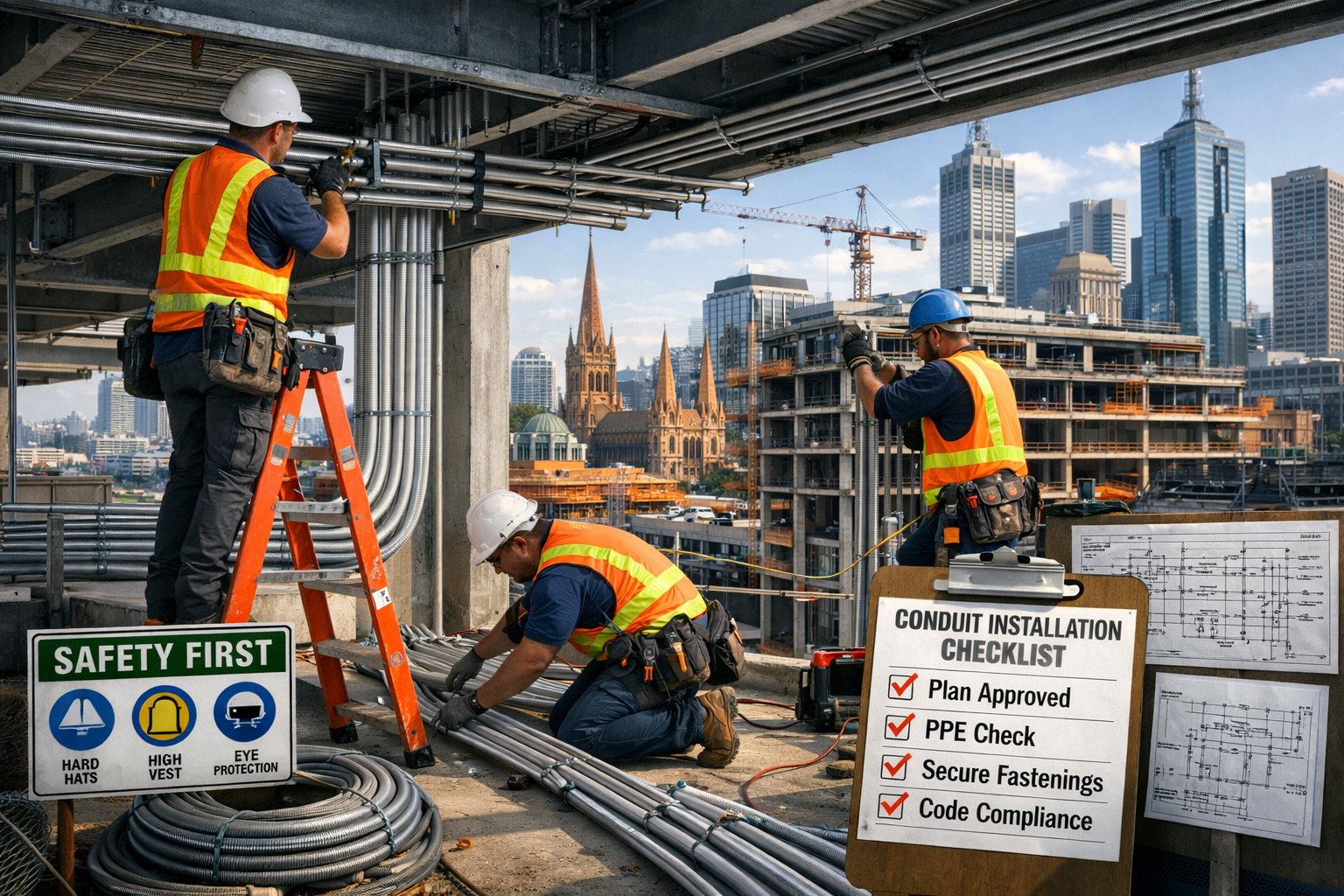
Commercial conduit installation refers to the proper placement and assembly of protective tubing—often referred to as “conduit”—that encases electrical wiring and cables in commercial buildings. The conduit is typically made from metal (like galvanized or EMT conduit) or PVC, offering a robust means of safeguarding electrical infrastructure from physical damage, moisture, and other environmental hazards.
Using commercial electrical conduit systems is essential when managing properties with complex electrical distribution systems. They ensure that electrical wiring protection is maintained over time, even as cables run through walls, ceilings, and underground. Whether you’re dealing with rigid conduit installation for durability or flexible conduit systems for tight spaces, the primary objective is the same: a safe electrical environment that complies with Melbourne’s building codes and the AS/NZS 3000 wiring rules.
—
Why is Compliance Important for Commercial Conduit Installations?
The significance of compliance in conduit installation cannot be overstated. Non-compliance can lead to:
- Legal Issues: Failing to meet electrical code compliance can result in serious legal and insurance complications.
- Electrical Hazards: Poor conduit installation increases the risk of shorts, fires, or other electrical mishaps.
- Compliance-Related Fines: Regulatory bodies strictly enforce electrical installation standards. If your commercial electrical work doesn’t pass inspection, you might face hefty fines.
- Financial Costs: Incorrect measurement, conduit sizing, or improper installation can result in costly repairs down the line.
- Downtime: Ill-planned conduit installation during commercial fit outs can disrupt your business operations.
Making sure your electrical installations meet the Australian standards and local building regulations not only protects your business but also enhances your property’s safety and resale value.
—
Essential Components of Commercial Conduit Installations
Before diving into the nitty-gritty of compliance requirements, let’s walk through the main components and types of conduits available in the market:
1. Metal Conduit Installation
Common types include:
- Rigid Metal Conduit (RMC) and Electrical Metallic Tubing (EMT): These are used for environments that require additional strength and durability.
- Galvanized Conduit: Often chosen for its corrosion resistance and long-lasting performance, especially in outdoor or harsh industrial environments.
Key Benefits:
- Enhanced durability.
- Excellent electrical grounding, which is crucial for safety.
- Superior resistance to physical damage.
2. PVC Conduit Installation
PVC conduit is popular due to its lightweight nature and ease of installation:
- It is ideal for both underground conduit installation and indoor commercial fit out electrical applications.
- Offers excellent resistance to moisture and chemicals.
Key Benefits:
- Cost-effective solution.
- Easier bending techniques compared to metal conduits.
- Non-corrosive nature for a clean, lasting finish.
3. Flexible Conduit Systems
Flexible conduits, sometimes used in retrofit projects, adapt to curves and tight spaces:
- Perfect for installations that require conduit bending techniques where sharp angles are involved.
- Often seen in commercial building electrical distribution where space constraints exist.
Key Benefits:
- Flexibility in routing.
- Faster installation times.
- Adaptability in older buildings requiring updates without extensive demolition.
Understanding which type of commercial electrical conduit best suits your project is the first step toward a safe and compliant installation process.
—
Compliance Standards in Melbourne: What You Need to Know
Melbourne’s electrical installations are governed by strict codes and regulations. Two key benchmarks you should be aware of include:
AS/NZS 3000 Wiring Rules
This set of standards (often dubbed the “Australian/New Zealand Wiring Rules”) is the backbone of electrical compliance:
- Safety: Ensures installations meet electrical installation standards and protect against hazards.
- Uniformity: Provides best practice guidelines for electrical cable management, conduit sizing requirements, and conduit sealing requirements.
- Inspection Procedures: Outlines testing procedures, such as conduit testing procedures, ensuring that installations are compliant with electrical safety rules.
Local Building Codes and Council Regulations
Melbourne local councils have additional regulations:
- Permit Requirements: Electrical permit requirements must be met before commencing conduit installation.
- Inspections: A thorough electrical inspection compliance process ensures continuous adherence to building codes.
- Conduit Pathway Design: Specific guidelines dictate the optimal routing of conduits to minimize risks.
It’s critical to partner with an electrical contractor in Melbourne who is well-versed in local codes. Licensed commercial electricians not only simplify the permit process but also save you from potential regulatory headaches.
—
Key Features and Benefits of Professional Conduit Installations
Now that we have a foundation on what commercial conduit installations are and why compliance is essential, let’s explore the specific features and benefits that professional conduit installation services can bring to your project:
Features
- Code Compliant Installations: Ensures adherence to AS/NZS 3000 wiring rules and local regulations.
- Customised Conduit Sizing: Proper assessment and installation that cater to the unique needs of your facility.
- Material Quality: Access to a wide range of conduit material types including rigid, flexible, PVC, metal, and even fire-rated conduit options.
- Expert Conduit Bending Techniques: Precision in conduit bending techniques to suit complex layouts.
- Integration with Electrical Infrastructure: Seamless integration with your overall electrical distribution systems.
- Durability: High-quality conduit systems designed to withstand both physical and environmental stressors.
Benefits
- Electrical Wiring Protection: Safeguards cables from damage due to environmental exposure and physical wear.
- Enhanced Safety: Minimizes risks of electrical fires and accidents by ensuring safe, compliant installations.
- Cost Savings: Prevents expensive repairs and legal hassles in the long run by performing compliant installations from the start.
- Operational Continuity: Reduces downtime by streamlining installations according to best practices and codes.
- Peace of Mind: Knowing that your commercial electrical work is compliant and inspected provides reassurance for your business operations.
- Efficient Layouts: Thoughtfully planned conduit pathways improve the overall efficiency and ease of future upgrades.
Investing in professional conduit installation isn’t just a matter of compliance—it’s about safeguarding your business and ensuring long-term operational success.
—
Practical Tips for Finding the Right Commercial Electrician in Melbourne
Taking the step towards a compliant conduit installation is easier when you partner with the right professionals. Here are some actionable tips to help you find a commercial electrician who meets your needs:
1. Verify Licensing and Certification
Always ensure that any prospective electrical contractor in Melbourne is fully licensed. Look for:
- Certification relevant to commercial electrical work.
- Experience specifically in conduit installation.
- Up-to-date knowledge of local regulations and AS/NZS 3000 wiring rules.
2. Assess Their Experience with Conduit Installation
Ask the electrician about their familiarity and experience with:
- Rigid conduit installation.
- Flexible conduit systems and conduit bending techniques.
- Installing various conduit materials like PVC, metal, and galvanized conduit.
3. Request Case Studies or References
A reliable contractor should be able to provide examples of past commercial conduit installation projects. This might include:
- Detailed project case studies.
- References from previous commercial property installations.
- Evidence of successful electrical inspections and compliance checks.
4. Detailed Quotations and Transparent Pricing
Understanding conduit installation cost breakdowns is key:
- Ensure the quotation includes costs for all materials, permits, and inspections.
- Ask for clear details on any potential additional charges, such as conduit maintenance services or repairs.
- Compare multiple quotes to gauge market rates, but remember that the cheapest option isn’t always the best for compliance and quality.
5. Ask About Their Approach to Compliance
An experienced contractor should be well-versed in:
- Local codes and electrical permit requirements.
- Best practices for conduit support brackets and junction boxes.
- Guidelines for proper electrical cable management.
- Procedures for ensuring weatherproof or fire-rated conduit installations when required.
6. Insurance and Warranty
Always check whether the contractor provides:
- Adequate liability insurance.
- Warranties on both labour and materials.
- Follow-up services for conduit maintenance or electrical conduit repairs down the track.
—
Preparing for Your Conduit Installation Project
Preparation is key to ensuring a seamless process when engaging commercial electricians for conduit installation. Here’s a step-by-step guide to get you started:
Step 1: Assessment and Planning
- Conduct a Site Survey: Before any work begins, a thorough assessment of your facility’s electrical infrastructure is essential. This helps in understanding the scope of work, including whether you need underground conduit installation or overhead conduit systems.
- Identify High-Risk Areas: Determine locations where electrical wiring protection is critical, such as areas prone to moisture, heavy foot traffic, or industrial machinery.
- Plan the Conduit Pathways: Work with your electrical contractor to draw up detailed conduit pathway designs, taking into account conduit junction boxes and support brackets.
Step 2: Budgeting and Quotation
- Estimate Installation Costs: Factor in the costs of different conduit types—whether it’s a rigid conduit installation for durability or PVC conduit for cost-effectiveness.
- Plan for Permits and Inspections: Include anticipated fees for permits and necessary inspections to ensure complete compliance with local building codes.
- Schedule Downtime: Plan installations during off-peak business hours to minimise disruption to your operations.
Step 3: Engaging a Professional
- Schedule Consultations: Meet with multiple contractors and request on-site evaluations.
- Clarify Project Scope: Ensure all details, from conduit sizing requirements to electrical cable management, are clearly documented.
- Discuss Timelines: Confirm timeframes for the commencement and completion of conduit installation, ensuring they align with your business schedule.
Step 4: During Installation
- Regular Site Walkthroughs: Stay engaged by scheduling site walkthroughs. This ensures the project is progressing in line with your expectations and compliance standards.
- Document Key Decisions: Keep a record of any changes or decisions made regarding conduit material types or pathway adjustments.
- Safety and Cleanliness: Ensure that the work area is safe and that the contractor follows proper safety protocols to reduce any disruption to your business.
Step 5: Post-Installation and Inspections
- Final Inspection: Once installation is complete, ensure a final thorough inspection is conducted to check for adherence to AS/NZS 3000 wiring rules and local regulations.
- Obtain Compliance Documentation: Request all necessary documentation as proof of compliance. This documentation not only helps during future property inspections but also aids potential future property sales.
- Maintenance Planning: Finally, discuss ongoing conduit maintenance services to ensure your electrical conduit systems remain in pristine condition, thereby prolonging their lifespan and maintaining safety standards.
—
Local Insights: Melbourne’s Best Practices and Codes
When it comes to commercial electrical work in Melbourne, understanding local nuances can make all the difference. Here are some key local insights:
Electrical Permit Requirements
Melbourne’s local council regulations require that:
- Conduit installations meet both state and local codes.
- Electrical permit applications are submitted prior to starting any significant commercial fit out electrical work.
- Licensed electricians manage and oversee the process, ensuring that applications include details like conduit pathway design, conduit support brackets, and any underground conduit installation specifics.
AS/NZS 3000 Wiring Rules in Practice
All commercial electrical projects in Melbourne must adhere to the AS/NZS 3000 guidelines. This involves:
- Strict adherence to electrical installation standards.
- Regular inspections and adherence to electrical safety switches and conduit grounding systems.
- Conduit installation guidelines that cover every detail from conduit junction boxes to conduit sealing requirements. Following these guidelines meticulously ensures inspections pass without delays.
Common Pitfalls and How to Avoid Them
- Incorrect Conduit Sizing: Undersized conduits can lead to overheating and inefficiencies. Ensure your contractor conducts a detailed load analysis.
- Poor Routing Choices: Conduits should be routed to minimise bends and stress points. Experts familiar with conduit bending techniques and pathway design can significantly reduce installation issues.
- Lack of Proper Support: Without the correct conduit support brackets, installations can sag or become misaligned. Regular maintenance inspections can help catch these issues early.
- Overlooking Weatherproofing: In outdoor areas, choose weatherproof conduit options, or fire rated conduit for specific zones, to guard against environmental damage.
Best Practices for Melbourne Installations
- Engage Local Experts: Work with contractors who operate extensively in Melbourne and are familiar with local climate challenges and building materials.
- Plan for Future Upgrades: Consider commercial electrical upgrades down the line. An efficient conduit system should accommodate future changes without major overhauls.
- Balance Aesthetics with Functionality: Even in commercial environments, neat and well-planned conduit installations can enhance the overall look and safety of your property.
- Documentation: Always keep updated records of your commercial electrical work for smooth property transactions and inspections.
—
Trends in Commercial Conduit Installation
As Melbourne continues to grow as a commercial hub, several evolving trends influence conduit installation:
Energy Efficiency and Sustainability
- Improved Cable Management: Modern conduit systems are designed to facilitate easier integration with energy-efficient lighting and smart building systems.
- Eco-Friendly Materials: Increasing demand for sustainable buildings has led to innovations in eco-friendly conduits that offer durability without an extensive carbon footprint.
- Future-Proof Designs: With technology evolving rapidly, conduit installation methods now consider potential future electrical load increases and the integration of renewable energy sources.
Technological Integration
- Smart Buildings: Conduits are becoming an integral part of smart electrical infrastructures, enabling remote monitoring and adaptive electrical management systems.
- Digital Documentation: Many contractors now provide digital project documentation, including digital drawings and inspection records, ensuring quick reference and long-term record keeping.
- Safety Enhancements: With rigorous testing procedures and new safety standards, modern conduit installations incorporate enhanced safety features that significantly reduce the risk of fire and electrical mishaps.
—
Frequently Asked Questions (FAQs)
Below are some commonly asked questions regarding commercial conduit installation in Melbourne and their answers:
Q1: What are the key differences between rigid, flexible, and PVC conduit installations?
A1: Rigid conduits (like EMT or galvanized conduit) offer superior strength and durability, making them ideal for environments that may experience physical stress. Flexible conduits are best used in areas where tight bends and complex layouts occur, while PVC conduits provide an economical and lightweight option particularly suited for indoor or underground installations.
Q2: How do I know if my conduit installation meets compliance standards?
A2: Ensure your installation adheres to AS/NZS 3000 guidelines, which cover conduit sizing requirements, proper support, and conduit sealing. Licensed commercial electricians in Melbourne will also follow local council requirements, conduct regular inspections, and provide documentation upon completion.
Q3: Are there any additional costs associated with complying with local electrical permit requirements?
A3: Yes. While installation quotes typically include labour and material costs, you should also plan for permit application fees, inspection charges, and any additional modifications needed to meet the local building codes.
Q4: How often should my conduit system be inspected?
A4: Regular maintenance checks are recommended annually or whenever significant electrical upgrades occur. This ensures that all conduit junction boxes and conduit support brackets remain secure and that any wear or damage is promptly addressed.
—
Conclusion
Commercial conduit installation in Melbourne isn’t just about running electrical cables through walls—it’s a critical component of ensuring safety, functionality, and compliance within your commercial property. From the choice between rigid, flexible, or PVC conduit installation, to keeping abreast of local electrical permit requirements and AS/NZS 3000 wiring rules, being informed is the first step in protecting your business.
By investing in professional conduit fitting services and partnering with licensed commercial electricians, you not only safeguard your building against potential hazards but also avoid the pitfalls associated with non-compliance. Remember, a well-planned conduit pathway design and meticulous adherence to electrical installation standards can be the difference between smooth operations and costly downtimes.
If you’re preparing for an electrical upgrade or planning a new commercial fit out, this guide should serve as your go-to resource for understanding the intricate details of conduit installation. With practical tips, detailed local insights, and an overview of compliance requirements, you’re now better equipped to ask the right questions, make informed decisions, and ensure that your electrical infrastructure is built to last.
So, whether you’re contemplating rigid conduit installation, need assistance with conduit bending techniques, or simply want to guarantee your installation is weatherproof and safe, Melbourne’s expert electrical contractors are ready to help. Reach out to a licensed commercial electrician today and ensure that your installation is not only up to code but also primed for safety and efficiency in the long run.
Here’s to a future of safe, compliant, and dependable electrical systems in your commercial property!
Taking the next step isn’t just about ticking boxes on compliance—it’s about securing the operational success and safety of your business. Get in touch with your local expert electrical contractor today, and let’s set up your commercial conduit installation to be a model of excellence and durability in Melbourne.
Feel free to share your experiences or questions in the comments below. We’re here to help you navigate every twist and turn of commercial electrical work, one conduit at a time!
By following the guidelines, tips, and best practices discussed here, you can be confident that your commercial electrical work will stand the test of time, providing both safety and peace of mind. Enjoy hassle-free conduit installations and build a solid electrical infrastructure for tomorrow’s challenges.


0 Comments