
Contents
- Introduction: The Importance of a Safe and Efficient Electrical Setup
- Understanding Laundromat Electrical Requirements
- Planning Your Commercial Electrical Installation
- Features and Benefits of a Modern Commercial Electrical Setup
- Practical Tips: Finding the Right Commercial Laundry Electrician in Melbourne
- Best Practices for Electrical Installation in a Laundromat
- Navigating Local Codes and Regulations in Melbourne
- Common Issues and Troubleshooting in Laundromat Electrical Setups
- Real-World Case Studies and Success Stories
- Final Thoughts: Making the Right Electrical Decisions for Your Laundromat
- Conclusion
Laundromat Electrical Setup Melbourne: Commercial Appliance Requirements
Running a laundromat isn’t just about having the best washers and dryers in town—it’s also about ensuring that your electrical setup is safe, efficient, and compliant with local regulations. As a small business owner here in Melbourne, you know that meeting commercial standards is not just a “nice-to-have”; it’s essential for the smooth operation and longevity of your business. In this blog post, we’ll explore everything you need to know about laundromat electrical requirements, including the planning, installation, and maintenance processes. Whether you’re setting up a new facility or upgrading an existing one, our friendly guide will help you navigate the complexities of commercial electrical installations for your laundromat.
In this article, we’ll cover:
- An explanation of laundromat electrical requirements and why they matter
- How commercial laundry electrical installation differs from residential setups
- The necessary electrical load calculations and power needs for heavy-duty equipment
- Practical tips for finding a commercial laundry electrician in Melbourne
- Best practices, codes, and regulations to ensure electrical compliance
- Features and benefits of using modern electrical systems in your laundromat
Let’s dive in and demystify the world of commercial electrical installations for your laundromat.
—
Introduction: The Importance of a Safe and Efficient Electrical Setup
For business owners, every aspect of your operations counts towards profitability and customer satisfaction. One often overlooked, yet critical, component is your electrical system. A robust electrical setup ensures that your washers and dryers perform at their best while keeping downtime and hazards to an absolute minimum.
Why Electrical Requirements Matter for Laundromats
Commercial laundromats have specific electrical requirements that differ significantly from residential setups. When you’re dealing with high-amperage commercial appliances, even minor deviations or inefficiencies can lead to significant energy waste, safety hazards, and costly service interruptions. Here are a few reasons why understanding and implementing proper electrical requirements is crucial:
- Safety: Incorrect installation or insufficient capacity can lead to electrical fires, malfunctions, or even electrocution risks.
- Efficiency: Proper load calculations and electrical designs ensure that your machinery operates within the optimal parameters for energy consumption, thereby reducing your operating expenses.
- Compliance: Adhering to Australian standards and Melbourne regulations is not just a legal obligation; it also upholds your reputation as a business that values safety and professionalism.
- Longevity: A well-maintained electrical setup increases the lifespan of your commercial laundry equipment, saving you money in the long term.
In the sections that follow, we’ll break down these topics further while providing practical tips and local insights specific to Melbourne’s commercial electrical landscape.
—
Understanding Laundromat Electrical Requirements
Before diving into the specifics of your setup, it’s essential to understand what “laundromat electrical requirements” really means. The design and installation of a laundromat’s electrical system involve several key considerations:
1. Commercial Laundry Electrical Installation vs. Residential Setup
Unlike a typical home electrical system, commercial installations are designed to handle much higher loads and continuous operating cycles. Key differences include:
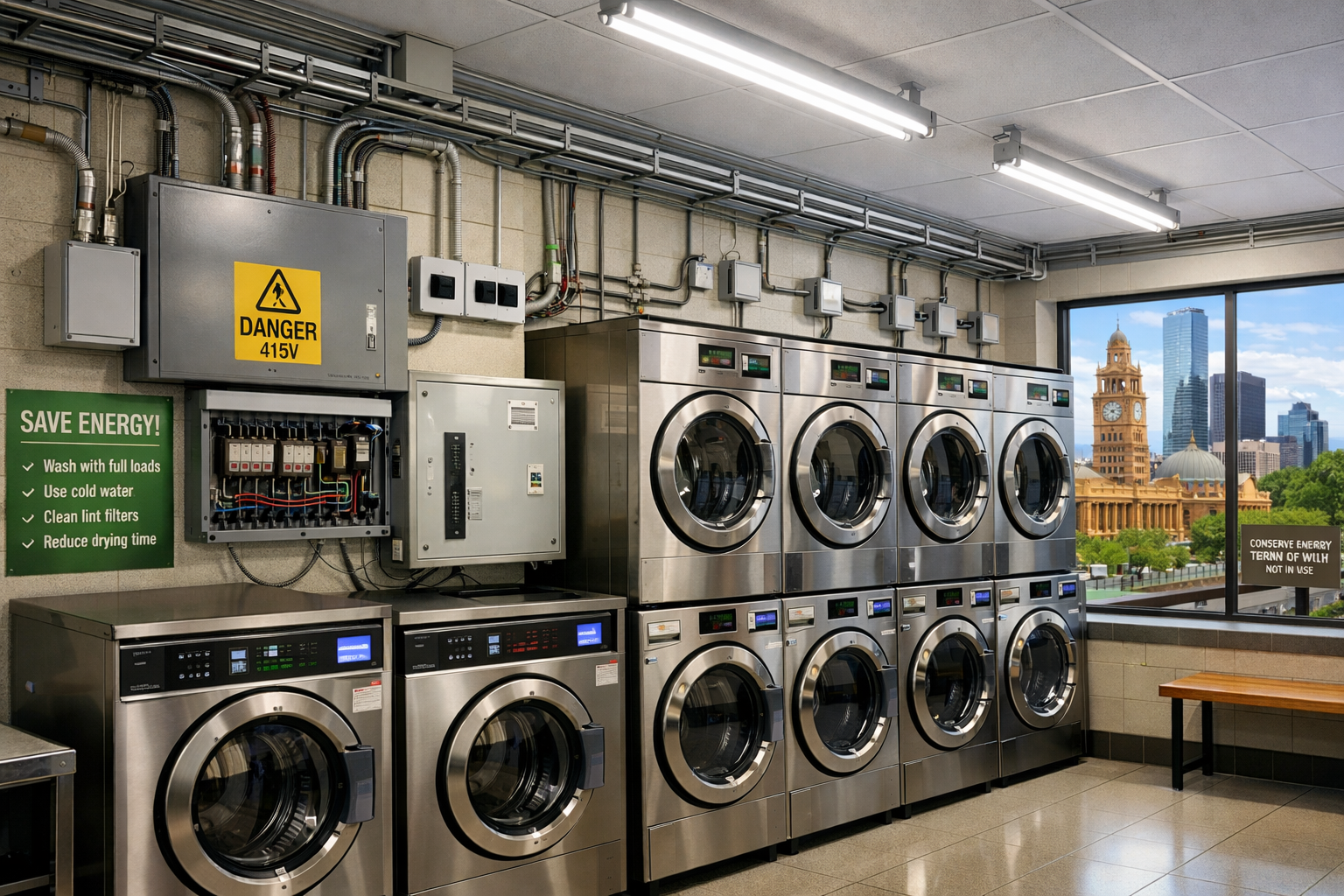
- Heavy-Duty Circuits: Commercial washers and dryers require robust circuits, often with higher amperage ratings and special considerations like three-phase power supply to ensure uninterrupted operation.
- Tailored Electrical Panels: A commercial electrical panel must cater to heavy loads and provide redundancy, ensuring that disruptions in one circuit don’t cascade to others.
- Enhanced Safety Measures: Industrial-grade circuit breakers, switchboard upgrades, and grounding systems are standard in commercial settings. Myriad safety checks are implemented to align with Melbourne’s stringent local codes.
2. Power Requirements for Commercial Laundry Equipment
Understanding your power supply needs is critical. Here are the main aspects to consider:
- Voltage and Amperage: Commercial laundry appliances often require specific voltage requirements. Many machines in a laundromat use a three-phase power supply, providing a higher voltage and more stable current, which helps in running high-power machines simultaneously.
- Load Calculations: Prior to installation, precise electrical load calculations must be performed. This ensures each appliance receives only the power it needs, protecting your equipment and reducing the risk of overload.
- Switchboard and Circuit Breaker Requirements: A dedicated switchboard for your laundromat with appropriately rated circuit breakers is fundamental. This prevents overloading and provides a pathway for quick shutdowns in case of emergencies.
3. Key Technical Specifications
Local Melbourne regulations and commercial standards dictate several technical specifications that must be met:
- Compliance with AS/NZS Standards: The Australian/New Zealand standards regulate electrical installations for commercial properties. Familiarity with these standards helps ensure that your establishment is both compliant and safe.
- Grounding and Bonding: Proper grounding is critical to dissipate electrical surges and ensure safety in case of faults.
- Panel Capacity: Your main electrical panel must be capable of handling the total load of all connected appliances, including future upgrades.
By understanding these components, you can better plan your installation, reducing the risk of interruptions and ensuring operational efficiency.
—
Planning Your Commercial Electrical Installation
Before you even pick up the phone to call a commercial electrician in Melbourne, you need to plan your installation thoroughly. Detailed planning minimizes risks and paves the way for a smooth and compliant setup.
Step 1: Assess Your Needs
Start by assessing the power demands of your laundromat. Consider these factors:
- Inventory of Machines: List all the washers, dryers, and ancillary equipment. Note down their power ratings and any special requirements (such as three-phase power).
- Future Expansion: If you plan on expanding your equipment or services in the future, factor this into your electrical load calculations.
- Operational Hours: Understand that a commercial laundromat often operates 24/7, meaning that your electrical infrastructure must be robust enough to handle continuous operation.
Step 2: Conduct Electrical Load Calculations
Electrical load calculations help determine the power required to run all your devices simultaneously. It’s essential to involve a qualified electrician to perform these calculations accurately, as they will:
- Calculate the total amperage needed.
- Identify the number of circuits required.
- Recommend the appropriate type of circuit breakers and switchboard configurations.
Step 3: Create a Detailed Electrical Layout
Work with your electrician to draft a comprehensive electrical layout that includes:
- Main Electrical Panel Details: Placement, capacity, and accessibility.
- Circuit Allocation: What circuits will power which machines, ensuring that each circuit’s load is balanced.
- Safety Systems Integration: Placement of surge protectors, grounding systems, and emergency shutoff mechanisms.
Step 4: Engage with Local Authorities and Permits
In Melbourne, commercial electrical installations must be approved by local councils and comply with national standards. Your preparation should account for:
- Obtaining Necessary Permits: Consult with your electrician on what permits are needed. This might include permits related to building modifications or electrical compliance certificates.
- Understanding Local Regulations: Familiarise yourself with Melbourne’s commercial electrical codes, such as the AS/NZS 3000: Wiring Rules, and any updates specific to commercial laundromats.
Step 5: Schedule the Installation
Plan your installation during a time that minimizes disruption to your business operations. A phased approach can be beneficial if you plan on upgrading an existing facility rather than constructing a new one. This way, you can keep parts of your business running during the upgrade.
—
Features and Benefits of a Modern Commercial Electrical Setup
When you invest in a modern electrical system for your laundromat, you’re not just checking off a compliance box—you’re also enhancing your operational efficiency, safety, and customer satisfaction. Let’s break down the features and benefits:
Enhanced Safety and Compliance
- Up-to-Date Safety Protocols: Modern installations come equipped with the latest safety features, including high-grade circuit breakers, surge protectors, and advanced grounding systems. This reduces the risk of dangerous electrical faults.
- Regulatory Compliance: All installations are performed in accordance with AS/NZS and Melbourne local regulations, giving you peace of mind that you’re operating legally and safely.
Improved Efficiency and Performance
- Optimised Energy Consumption: Accurate load calculations and tailored circuit designs mean that you’re only using the energy that your machinery needs, which can result in substantial savings over time.
- Reduced Downtime: A robust and well-planned electrical setup means fewer malfunctions and interruptions. This reliability translates directly to uninterrupted business operations.
- Customisable Design: Modern electrical layouts can be designed to easily incorporate new equipment, meaning that your system can grow with your business. This is especially important if you plan to expand or upgrade your machines in the future.
Future-Proofing Your Operations
- Scalable Infrastructure: With an eye on future expansion, a modern electrical setup is designed to easily accommodate new high-powered equipment, ensuring that your facility remains efficient as your needs evolve.
- Enhanced Monitoring and Maintenance: Many modern systems now offer smart monitoring systems. This means that potential issues can be detected and rectified before they cause significant downtime.
- Long-Term Cost Efficiency: While the initial investment may be significant, the long-term savings on maintenance, energy, and emergency repairs quickly add up.
—
Practical Tips: Finding the Right Commercial Laundry Electrician in Melbourne
One of the most critical components of your electrical setup is choosing the right electrician. Here’s how you can ensure you find a qualified professional who understands the unique challenges of a commercial laundry environment.
Do Your Homework
- Experience Matters: Look for electricians who have extensive experience with commercial electrical installations, particularly for industrial equipment like laundromats. Ask for case studies or examples of previous jobs, especially those related to high amperage laundry equipment.
- Licensing and Certification: In Melbourne, all commercial electricians must be licensed to work with commercial installations. Confirm that your electrician holds the appropriate certifications and stays current with continuing education and training.
Ask the Right Questions
When interviewing potential contractors, consider asking:
- What experience do you have with commercial laundry electrical installations?
- Can you provide references or testimonials from other laundromat owners?
- How do you handle compliance with local regulations and safety standards, such as AS/NZS 3000?
- What is your process for performing electrical load calculations and designing the circuitry for a commercial laundry setup?
- How do you structure your maintenance and troubleshooting services after the installation is complete?
Get Multiple Quotes
Don’t settle for the first estimate you receive. Request quotes from several reputable commercial electricians in Melbourne. This not only gives you a sense of market rates but also allows you to compare different approaches to your project.
Verify Local Knowledge
It’s imperative your electrician understands Melbourne’s specific regulations, codes, and requirements for commercial installations. A local specialist will be more familiar with local permitting processes, safety inspections, and compliance nuances.
Look for Comprehensive Services
A one-stop-shop service can save both time and hassle. Look for electricians who offer:
- Detailed initial assessments and load calculations
- Full installation services from design to commissioning
- Ongoing maintenance and support
- Emergency troubleshooting
- Assistance with obtaining permits and compliance certificates
—
Best Practices for Electrical Installation in a Laundromat
Implementing best practices in your installation can greatly reduce the risk of issues down the line. Here are some tips and guidelines based on Melbourne’s industry standards:
Adherence to National Standards
Ensure your installation complies with the latest AS/NZS standards, especially AS/NZS 3000—the Wiring Rules. These guidelines cover:
- Safe installation procedures
- Minimum standards for circuit design and wiring
- Equipment requirements for commercial environments
Accurate Electrical Load Calculations
Invest time and resources into getting accurate electrical load calculations. Engaging a professional to assess:
- The number of high-power machines
- The total amperage required
- Proper allocation of circuits
Can save you from future headaches and costly system overhauls.
Focus on Redundancy
With commercial laundromats often operating around the clock, redundancy is key. Consider installing:
- Backup circuits or generators for emergency power
- Dual circuits for critical areas to avoid complete shutdowns in case of a failure
- Smart systems that can automatically switch loads if one circuit fails
Regular Electrical Inspections and Maintenance
An electrical system isn’t a set-it-and-forget-it component. Regular inspections ensure that:
- All equipment is operating at optimal levels
- Potential issues are identified early
- Safety hazards are mitigated proactively
Schedule annual or bi-annual checkups with your commercial electrician to maintain compliance and performance.
Incorporate Future-Proofing
Plan for future upgrades by:
- Choosing a higher capacity switchboard than what’s immediately necessary
- Designing circuit pathways that allow for additional load without complete rewiring
- Keeping documentation on your setup for easier future modifications
—
Navigating Local Codes and Regulations in Melbourne
Understanding and adhering to local codes is critical for avoiding fines and ensuring the safety of your establishment. Here’s what you need to know about Melbourne’s local regulations for commercial electrical installations:
Permits and Approvals
- Council Regulations: Each local council in Melbourne may have specific requirements for commercial establishments. Be sure to check with your local council regarding necessary permits for electrical upgrades or new installations.
- Electrical Safety Certificates: Once your installation is complete, you must obtain an Electrical Safety Certificate. This document verifies that your setup complies with AS/NZS 3000 standards and local laws.
- Building Codes: Ensure that your installation also aligns with the broader building codes applicable to commercial ventures in Melbourne. This includes regulations affecting structural modifications and energy efficiency requirements.
Engaging with the Regulator
An experienced local electrician will not only install your system but also liaise with local authorities on your behalf. They’ll ensure:
- All necessary inspections are scheduled and results reported
- Documentation is correctly filed for permit renewals or future audits
- Your establishment remains compliant with any new regulations as standards evolve
Documentation and Record Keeping
Maintain detailed records of all installations, inspections, and maintenance works. This documentation is crucial if:
- You decide to sell your business
- You need to prove compliance during inspections
- Future upgrades require a reference to previous installation documents
Staying Updated with Changes
Electrical codes and regulations evolve. Stay updated by:
- Regularly checking updates from Standards Australia and local councils
- Participating in local business owner forums or trade associations
- Consulting with your electrician about any changes that might impact your setup
—
Common Issues and Troubleshooting in Laundromat Electrical Setups
Even with a well-thought-out plan, issues can occasionally arise. Being proactive and knowing how to troubleshoot common problems can prevent downtime and maintain a smooth operation.
Overloading Circuits
One of the most common issues is overloading circuits, which can occur if:
- Too many high-powered machines are connected to a single circuit
- New equipment is added without recalculating the load requirements
- Routine maintenance and inspections are neglected
To prevent overloading:
- Always adhere to the electrical load calculations recommended by your electrician
- Regularly inspect your switchboard and circuit breakers
- Upgrade the electrical capacity if you anticipate higher demand
Malfunctioning Circuit Breakers
Circuit breakers are designed to trip when there’s an electrical fault. Frequent tripping can indicate:
- An overload or poor distribution of power
- Faulty wiring or degraded components
- Issues with specific machines drawing excessive power
In such cases:
- Schedule an inspection promptly
- Verify that your appliances are functioning correctly
- Consider a professional review of your circuit allocation and load distribution
Power Surges and Electrical Safety
Power surges in a commercial setting can damage heavy-duty equipment. To mitigate this risk:
- Install surge protectors and voltage regulators
- Ensure your grounding system is intact and functional
- Regularly check for any signs of wiring degradation or loose connections
Troubleshooting Tips
- Document Each Issue: Keep a log of any electrical malfunctions. This record can assist your technician in diagnosing recurring problems.
- Scheduled Maintenance: Prevent issues from arising by maintaining a regular inspection schedule.
- Professional Support: Never attempt to fix high-amperage or industrial electrical issues on your own; always rely on a licensed commercial electrician.
—
Real-World Case Studies and Success Stories
Understanding how others have successfully navigated laundromat electrical setups in Melbourne can be a great source of inspiration and practical guidance.
Case Study 1: Upgrading an Existing Laundromat
A well-known coin-operated laundromat in Melbourne faced frequent breakdowns due to an outdated electrical system. A commercial electrician conducted a comprehensive load calculation and recommended a complete switchboard upgrade along with the integration of a three-phase power supply. By upgrading the circuit breaker system and reallocating loads more evenly:
- Downtime was reduced by 40%
- Energy efficiency improved dramatically
- Compliance with the latest AS/NZS standards was achieved
The business owner noted that not only did the improvements save money in operational costs, but the enhanced safety features also boosted customer confidence.
Case Study 2: New Installation in a Commercial Fit-Out
A new commercial laundromat in the suburbs of Melbourne was being set up in a recently constructed industrial space. The electrician provided a full-scale design that considered both present needs and future expansion plans. Key elements included:
- A highly detailed electrical layout tailored to anticipated increases in load
- Installation of smart monitoring systems for proactive maintenance
- A permit-assisted installation process that ensured all local codes were strictly followed
The project was completed on time and within budget, and the owner appreciated the minimal disruption during business hours, allowing for a seamless transition into operations.
—
Final Thoughts: Making the Right Electrical Decisions for Your Laundromat
Investing in a proper electrical setup for your laundromat is an investment in your business’s future. By ensuring that every aspect of your installation—from load calculations to compliance with Melbourne’s local codes—is meticulously planned and executed, you’re setting the stage for reliable, safe, and efficient operations.
Recap of Key Points
- Understand the Requirements: Commercial laundry electrical installations have specific needs, including heavy-duty circuits and tailored power solutions.
- Plan Thoroughly: Detailed planning, from load calculations to obtaining permits, minimizes risks and prevents costly interruptions.
- Choose Quality over Cost: Always engage experienced, licensed electricians who have a strong local background and proven track records in commercial installations.
- Prioritize Safety and Compliance: Adhering to standards such as AS/NZS 3000 and the local regulations in Melbourne is non-negotiable.
- Future-Proof Your Setup: Design your electrical infrastructure with an eye on the future—it should accommodate upgrades, expansions, and evolving energy requirements.
Empower Your Business with the Right Electrical Partner
Your commercial laundry setup deserves the expertise of professionals who understand the intricacies of heavy-duty electrical installations. By aligning yourself with a reputable, local commercial electrician in Melbourne, you’re not just complying with regulations—you’re investing in a hassle-free operation that benefits both your bottom line and customer satisfaction.
Remember, the electrical system is the backbone of your laundromat. When it’s robust and well-structured, it guarantees that your washing machines, dryers, and ancillary equipment operate without hiccups, letting you focus on delivering excellent customer service and expanding your business.
Final Practical Tips
- Always schedule regular inspections and maintenance sessions.
- Document every change or upgrade to ensure easy troubleshooting in the future.
- Stay informed about local code updates and be proactive in seeking professional advice when planning any expansion or modification.
- Don’t underestimate the value of professional load calculations—accurate assessments today prevent major issues tomorrow.
—
Conclusion
Setting up or upgrading the electrical system for your laundromat in Melbourne might seem daunting at first, but with the right approach and professional guidance, it becomes a straightforward process. By understanding your commercial appliance requirements, carrying out detailed load calculations, and strictly adhering to local codes and regulations, you can construct an electrical infrastructure that is both safe and scalable. This not only ensures your business operates efficiently but also enhances customer confidence through improved safety measures.
For Melbourne small business owners, this guide is your starting point to making informed, effective decisions about your commercial laundry electrical setup. If you have any questions or need tailored advice, don’t hesitate to reach out to a local commercial electrician who can provide the expertise and support necessary to turn your vision into a safe, functioning reality.
Remember: a reliable electrical system is the unsung hero behind every successful laundromat. With careful planning and the right professional help, you can rest assured that your electrical infrastructure will serve your business well for years to come.
By following these guidelines and tips, your laundromat’s electrical system will not only meet the demands of heavy-duty commercial usage but will also comply with Melbourne’s rigorous standards. Investing in state-of-the-art electrical installations means fewer disruptions, reduced energy costs, and heightened safety—all of which contribute to a thriving business.
Whether you’re just starting your laundromat journey or looking to upgrade an existing setup, prioritise quality, safety, and compliance. With the right commercial electrician and a clear plan in hand, your laundromat will be well-equipped to handle the power needs of modern, high-performance laundry equipment.
Thank you for reading our comprehensive guide on laundromat electrical setups in Melbourne. We hope you now feel more confident in understanding the technical, safety, and regulatory aspects that are crucial for your commercial operation. Happy washing—and here’s to an electrifying future for your business!
0 Comments