Table of Contents
- Why Cafe Electrical Setup Matters to Melbourne Business Owners
- Components of a Successful Cafe Electrical Setup in Melbourne
- Local Codes, Regulations, and Best Practices in Melbourne
- Features and Benefits of Hiring a Professional Commercial Electrician
- Practical Tips for a Successful Cafe Electrical Setup
- In-Depth Look at Specific Electrical Requirements for Cafes
- How to Prepare for Your Electrical Fitout Project
- Choosing the Right Commercial Electrician in Melbourne
- Frequently Asked Questions
- Conclusion
- Final Checklist for Cafe Electrical Setup in Melbourne
Setting up your cafe’s electrical system in Melbourne isn’t just about plugging in appliances – it’s about ensuring your business runs smoothly, safely, and in compliance with local standards. Whether you’re renovating an old space or starting from scratch, investing in a quality electrical setup is critical to your success in the competitive hospitality industry. In this comprehensive guide, we’ll walk you through everything from the basics of cafe electrical installation to the finer points of commercial kitchen wiring and front of house lighting design. By the end, you’ll be armed with the information you need to select the right commercial electrician Melbourne has to offer, understand local codes and regulations, and plan a setup that powers your cafe’s operations seamlessly.
In this post, we’ll explore:
- Why a robust electrical setup is crucial for cafes.
- Detailed information on the elements of cafe electrical design.
- Steps to solve potential electrical issues and ensure safety.
- Features and benefits of professional electrical services.
- Practical tips on finding the right commercial electrician and preparing your project.
- Local information on Melbourne’s best practices, codes and regulations.
Let’s jump in and get your electrical set up sorted so your cafe can brew up success with reliable power and cutting-edge electrical design.
—
Why Cafe Electrical Setup Matters to Melbourne Business Owners
Running a cafe in Melbourne means contending with high customer expectations, a bustling market, and stringent safety and regulatory codes. A properly designed and executed electrical setup is the backbone of your business. Here’s why:
- Efficient Operations: The electrical network powers everything—from coffee machines and kitchen equipment to POS systems and customer lighting. A properly configured system minimizes downtime and helps keep operations running smoothly.
- Safety First: Commercial electrical installations in public venues must meet strict safety standards. Compliance with regulations like the AS/NZS 3000 Wiring Rules ensures the safety of your staff, customers, and property.
- Cost Savings: An optimized electrical system is energy-efficient, potentially lowering energy bills. Additionally, secure installations help prevent costly mishaps or future renovations.
- Customer Experience: Ambience matters. Thoughtful lighting design and seamless power supply to appliances create a welcoming atmosphere that keeps customers coming back.
- Future-Proofing: With evolving technology and new equipment constantly emerging, planning for scalability in your electrical setup ensures you’re ready for future upgrades.
A strategic approach to your cafe’s electrical installation is, therefore, both a competitive advantage and a regulatory necessity.
—
Components of a Successful Cafe Electrical Setup in Melbourne
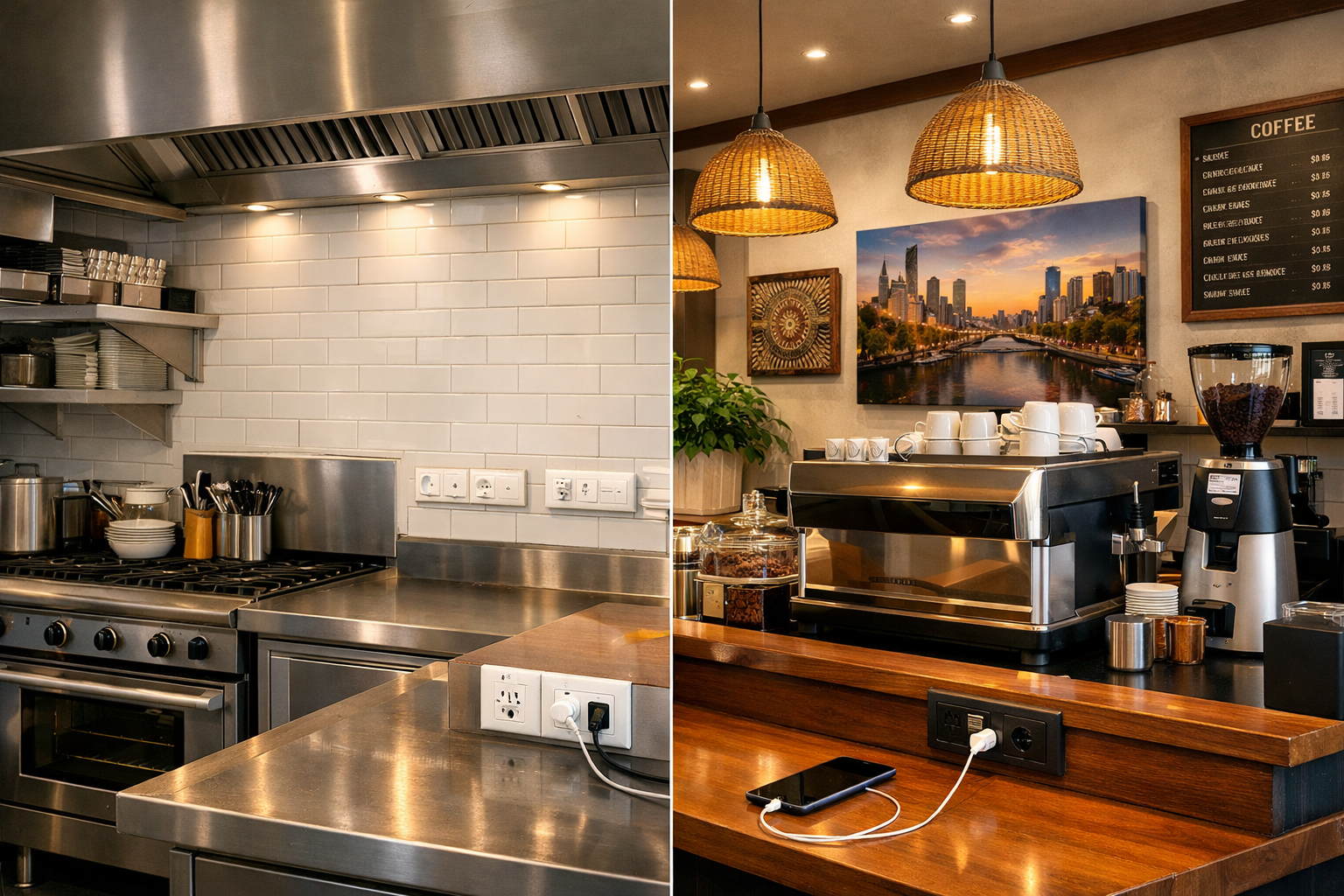
When planning your cafe electrical setup, there are several components to consider. It’s not just a matter of installing random outlets; every element should be part of an integrated system that caters to both the front of house and the bustle of the commercial kitchen.
1. Commercial Kitchen Electrical Design
The heart of many cafes is their kitchen, where precision in wiring and power distribution translates to operational efficiency. Here are the key factors:
- Kitchen Equipment Installation: Commercial appliances such as ovens, fryers, dishwashers, and coffee machines require dedicated circuits and high voltage supply. Your commercial kitchen electrician will design circuits that support high-load equipment.
- Commercial Kitchen Power & Wiring: This includes a mix of single-phase and three-phase power installations. Three-phase power is particularly important for heavy-duty commercial appliances. A calculator for the cafe’s electrical load ensures that circuits aren’t overloaded.
- Commercial Kitchen Wiring and Safety Switches: Utilizing safety switches and isolation measures can prevent accidents and electrical hazards. Lightning protection, proper grounding, and cable routing are essential considerations.
- Kitchen Extraction Electrical & Ventilation: The installation of kitchen ventilation systems – including extraction fans – must be designed to balance power loads with safety. An electrician familiar with kitchen extraction electrical systems will ensure that the setup complies with local commercial safety codes.
- Appliance Installation & Certification: Ensure that all major appliances have the necessary electrical certification and are installed in accordance with Australian electrical standards. Regular maintenance and commercial electrical inspection by competent professionals help in meeting these requirements.
Cafe Lighting Installation
The front of house in a cafe isn’t just about aesthetics; it also needs to cater to functionality such as POS systems, lighting, and customer ambiance. Here’s how:
- Cafe Lighting Installation: Lighting sets the mood. Modern LED and smart lighting solutions not only reduce energy consumption but also enhance customer experience. Strategic placement of lights can highlight decor, signage, and dining areas.
- Cafe Power Points and Data Cabling: With a blend of high-tech POS systems, Wi-Fi routers, and security cameras in use, ensuring a sufficient number of power points and reliable data cabling is critical. It’s important that these installations meet commercial electrical compliance standards.
- Commercial Appliance Installation: Installing and verifying equipment like coffee machines and cash registers in compliance with commercial electrical safety norms is necessary for uninterrupted operations.
- Emergency Lighting & Switchboard Upgrades: A well-designed emergency lighting system and an effective switchboard upgrade are crucial for safety in the event of power outages or emergencies.
- Modern POS System Integration: A dedicated electrical plan that includes data and power integration for your POS system can prevent disruptions during peak hours.
—
Local Codes, Regulations, and Best Practices in Melbourne
Navigating Melbourne’s regulations can seem daunting, but it’s essential for running a compliant and safe business. Here’s what you need to know:
Australian and Local Standards
- AS/NZS 3000 Wiring Rules: These are the go-to standards for electrical installations in Australia, ensuring the safety and performance of electrical systems. Any commercial electrician in Melbourne must adhere to these wiring rules.
- Local Council Permits: Before installation, ensure you check with your local council regarding any permits required, especially if you’re altering structural elements or installing significant new electrical components.
- Inspection and Certification Requirements: Once your installation is complete, it must be inspected and tested according to commercial electrical safety certification standards. This not only keeps you compliant but also boosts customer trust.
- Compliance with Hospitality Electrical Standards: Specific guidelines exist for hospitality venues that address common risks and operational challenges unique to cafes. Your electrician should have a deep understanding of these standards.
Best Practices for Compliance:
- Engage Licensed Professionals: Always opt for licensed and experienced commercial electricians in Melbourne for your cafe fitout electrical work.
- Regular Maintenance and Inspections: Schedule periodic inspections to ensure that your electrical system remains compliant with updated codes and is functioning safely.
- Document Everything: Keep copies of inspection certificates, permits, and maintenance records. These documents are crucial for legal compliance and insurance purposes.
- Plan for Future Upgrades: Staying compliant isn’t a one-time process. Design your system with future expansion in mind so that any additional loads or modern equipment can be integrated without hassle.
- Energy Efficiency Measures: Installing energy-efficient systems such as LED lights and low-energy appliances can help reduce operational costs while complying with evolving environmental regulations.
—
Features and Benefits of Hiring a Professional Commercial Electrician
When it comes to a project like cafe electrical setup Melbourne requires, partnering with a professional can make all the difference. Here are the key benefits and features you should expect:
Features:
- Comprehensive Planning and Design: Professionals offer end-to-end services from initial design and planning to installation and final inspection.
- Tailored Solutions: An expert electrician will assess your cafe’s specific needs, including both commercial kitchen and front-of-house requirements. Whether it’s a three-phase power installation or specialized cafe data cabling for your POS system, solutions are customised.
- Quality Workmanship: With quality materials, state-of-the-art tools, and advanced techniques, professional electricians deliver reliable and long-lasting electrical installations.
- Safety-first Approach: From advanced safety switches to properly grounded circuits, professional electricians implement rigorous safety measures to safeguard your business.
- Regulatory Knowledge: Professionals are well-versed with local codes, such as the AS/NZS 3000 wiring rules, and ensure that every aspect of your project complies with legal standards.
Benefits:
- Reduced Operational Downtime: With a professionally designed setup, the risk of electrical failures is minimized, ensuring that your cafe can operate at full capacity.
- Improved Energy Efficiency: Modern electrical installations focus on energy efficiency, potentially lowering your energy bills and reducing your carbon footprint.
- Enhanced Customer Experience: A well-lit, technologically integrated front-of-house area enhances the overall ambiance, improving customer satisfaction and retention.
- Cost Efficiency Over Time: Although professional services might have a higher upfront cost, the long-term benefits include fewer repairs, enhanced safety, and regulatory compliance.
- Future-proofing: Investing in a professional setup means you’re prepared for future technological upgrades, making subsequent renovations more straightforward and cost-effective.
—
Practical Tips for a Successful Cafe Electrical Setup
Planning your cafe’s electrical system can seem overwhelming, but breaking it down into manageable steps can make the process much more straightforward. Here are some practical tips:
1. Assess Your Cafe’s Electrical Needs
Before you call in the experts, sit down and make a list of all the areas in your cafe that require electrical work:
- For the kitchen:
- List all high-powered equipment (ovens, coffee machines, fridges, dishwashers).
- Note any specific heating or extraction systems.
- For the front of house:
- Identify lighting needs for ambience and operational efficiency.
- Determine the locations for power points for customer use, security cameras, and the POS system.
- Consider data cabling for Wi-Fi, digital menus, or entertainment systems.
Understanding your needs in detail helps you communicate effectively with your commercial electrician and ensures nothing is overlooked.
2. Find a Licensed and Reliable Commercial Electrician in Melbourne
When searching for a commercial electrician, look for professionals who specialize in hospitality electrical services. Here are a few tips:
- Check Qualifications: Ensure the electrician is licensed and has experience with similar projects such as cafe electrical installation, restaurant electrical wiring, or commercial kitchen wiring.
- Read Reviews: Look for reviews on platforms like Google, Yelp, or local forums. Feedback from other café owners can be invaluable.
- Ask for References: Request case studies or references from previous cafe fitout electrical projects.
- Verify Insurance and Certification: Confirm that the electrician carries the necessary insurance and provides certificates of compliance.
3. Plan Your Budget and Timeline
Electrical upgrades can vary in cost depending on the complexity. Here’s how to plan effectively:
- Obtain Detailed Quotes: Have your electrician provide a comprehensive quote that details labor, materials, and any contingencies.
- Prioritize Essential Areas: Focus your budget on high-priority areas first, such as the commercial kitchen setup and safety-critical systems like emergency lighting.
- Plan for Contingencies: Always allow a margin in your budget for unexpected costs, particularly if upgrades are required to meet new safety standards.
- Coordinate with Other Fitout Projects: If you’re doing a full cafe renovation, coordinate the electrical work with other contractors to avoid scheduling conflicts and additional costs.
4. Prepare Your Space
Before the electrical work begins, make sure your space is ready for a smooth installation:
- Clear the Area: Remove any furniture or obstacles that might hinder access to key areas, especially in the commercial kitchen.
- Mark Key Zones: Clearly identify areas where new equipment will be installed, such as coffee machines, POS systems, or specialized lighting fixtures.
- Schedule Downtime: If possible, schedule the installation during off-peak hours or periods when the cafe is closed to minimise disruption.
- Communication is Key: Keep your staff in the loop about the installation timeline and any temporary changes in operations to avoid confusion.
5. Post-Installation Checks and Regular Maintenance
After the installation is completed, ensure that everything is in perfect working order:
- Inspection and Certification: Don’t skip the final inspection and certification process. This step is crucial for compliance with commercial electrical standards.
- Staff Training: Educate your staff on the use of new equipment and safety procedures related to the updated electrical system.
- Keep Documentation: Maintain records of installation certificates, inspection reports, and service agreements for future reference.
- Schedule Routine Maintenance: Regular maintenance checks by your commercial electrical contractor can help detect issues before they become major problems.
—
In-Depth Look at Specific Electrical Requirements for Cafes
Let’s take a closer look at some specific elements that are critical in setting up a cafe electrical system in Melbourne, particularly when dealing with the unique demands of a cafe environment.
Cafe Electrical Installation
Setting up a cafe electrical installation isn’t a one-size-fits-all scenario. It involves:
- Tailored Circuits: Each section of your cafe, be it the busy kitchen or the quiet customer seating area, may require separate circuits. This ensures that heavy power loads in the kitchen don’t affect the front-of-house ambiance.
- Load Calculations: A professional electrician will perform detailed load calculations to determine the optimal number and size of circuits, ensuring that your system can handle simultaneous equipment use without tripping breakers.
- Switchboard Upgrades: Older buildings might have outdated switchboards that need to be upgraded to cope with modern power demands. Upgrading the cafe switchboard can be essential for ensuring efficient distribution of power and preventing electrical hazards. See our commercial switchboard upgrades service for more information.
Commercial Kitchen Electrical Considerations
In a commercial kitchen, reliability is key. Here are the electrical issues that need special attention:
- High-Powered Appliances: Installation of equipment like industrial coffee machines or high-output ovens necessitates special wiring arrangements and dedicated circuits.
- Safety Compliance: With the risk of water and high temperatures in a kitchen environment, ensuring proper insulation and moisture-resistant setups helps in avoiding electrical hazards.
- Extraction and Ventilation: Proper installation of extraction systems for removing smoke and heat is essential. This involves careful electrical planning to ensure ventilation systems are both efficient and safe.
- Emergency Protocols: Installing emergency lighting and safety switches not only meets compliance requirements but also protects your team in case of any mishaps.
Front of House Electrical Setup
Your front of house area is a customer-facing element of your cafe where design and functionality go hand in hand:
- Ambience Lighting: Modern LED lighting systems allow for creative designs that enhance the cafe’s ambiance while keeping energy consumption low. For larger retrofits consider an LED lighting conversion.
- Data and Connectivity: With digital ordering systems and Wi-Fi becoming standard, careful placement of data cabling and robust power points ensures that the customer experience isn’t interrupted.
- Visual Appeal: Café lighting installation isn’t just for functionality – thoughtful lighting design can transform your space into a memorable venue that attracts repeat business.
- Energy Efficiency: Energy-efficient lighting and state-of-the-art electrical solutions reduce operational costs and align with sustainability trends increasingly favoured by Melbourne business owners.
—
How to Prepare for Your Electrical Fitout Project
Being well-prepared can drastically improve the efficiency and cost-effectiveness of your cafe electrical project. Here’s a checklist to help you get ready:
- Documentation and Plans:
– Gather blueprints or layout plans of your cafe.
– Note any structural changes that might affect the electrical installation. - Define Priorities:
– Determine which areas need immediate attention (e.g., kitchen equipment, emergency lighting).
– Identify potential expansions, like additional seating or extra charging stations for customers. - Liaise with Your Contractor:
– Establish clear communication channels with your chosen electrician.
– Schedule regular check-ins during the project to monitor progress and address any concerns. - Budget Considerations:
– Outline a budget that includes both planned expenses and potential contingencies.
– Discuss payment terms and warranties with your electrical contractor. - Local Council and Permits:
– Verify that all necessary permits are in place before the work begins.
– Understand any local guidelines regarding modifications to existing electrical systems. - Contingency Plans:
– Develop a plan in case you need to temporarily suspend normal operations during the electrical upgrade.
– Inform your customers via social media or signage if parts of the cafe will be inaccessible during the renovation.
—
Choosing the Right Commercial Electrician in Melbourne
Finding the right commercial electrician isn’t just about their technical skills; it’s also about ensuring they understand the unique needs of a busy hospitality environment.
Key Traits to Look For:
- Experience in Hospitality Electrical Services:
Look for electricians who have completed similar projects, such as restaurant electrical wiring or coffee shop electrical requirements. Their experience directly translates to fewer mistakes and more effective designs. - Local Expertise:
An electrician who specializes in commercial electrician services in Melbourne understands the local regulations and the specific challenges of Melbourne’s built environment. They’re familiar with the nuances of local councils, permit requirements, and maintenance practices. - Transparent Communication:
A good contractor will explain all aspects of the project, from planning to compliance, in a way that makes sense to a small business owner. They’ll also be proactive about addressing your concerns and providing clear timelines. - Customer Service:
As a small business owner, you need a partner who cares about your operations as much as you do. Choose someone who is accessible, responsive, and understands that your downtime means lost revenue.
—
Frequently Asked Questions
Here are some common questions that cafe owners often have regarding their electrical setups:
- Q: What is involved in a typical cafe electrical installation?
- A: A complete installation covers everything from power point placement for equipment and POS systems in the front of house to robust wiring and dedicated circuits for high-powered kitchen appliances. It also involves meeting both local council and national electrical standards.
- Q: How can I ensure compliance with Melbourne’s electrical regulations?
- A: Always work with a licensed commercial electrician who understands Australian Standards (AS/NZS 3000) along with local council requirements. Regular maintenance and inspection reports are also critical for ongoing compliance.
- Q: What kind of upgrades might my cafe require?
- A: Depending on the equipment and layout, your cafe might need a switchboard upgrade, dedicated circuits for high-load equipment, specialized lighting circuits, data cabling integration, and energy-efficient lighting solutions.
- Q: How do I budget for a cafe electrical setup?
- A: Start by listing all the electrical requirements for both your kitchen and front-of-house areas. Obtain multiple quotes from licensed electricians and include contingency funding for unexpected upgrades or permit fees.
- Q: Are there energy efficiency benefits?
- A: Absolutely. Modern installations often incorporate energy-efficient LED lighting and optimized power distribution, which can reduce your energy bills and help your business contribute to sustainability efforts.
—
Conclusion
A well-designed cafe electrical setup in Melbourne is more than just aesthetics or convenience—it’s about creating a robust, safe, efficient, and compliant system that supports every aspect of your business. Whether you’re renovating a seasoned establishment or starting fresh, investing in quality electrical work is a strategic decision that can save you time, money, and headaches down the line.
From ensuring that your commercial kitchen runs efficiently with dedicated circuits for each piece of equipment, to creating a welcoming ambiance in your front-of-house with smart lighting and modern power solutions, every detail plays a role in your success. Additionally, by aligning your project with local codes, such as the Australian Standard AS/NZS 3000, and securing all necessary permits, you not only avoid compliance issues but also build a reliable foundation for future growth.
Remember that a successful project begins with thorough research, clear communication with a qualified electrician, and proper planning. With the right approach and trusted local experts, your café’s electrical system will empower your operations, enhance customer experience, and ultimately contribute to your bottom line.
Planning a robust electrical setup is an investment in your cafe’s long-term success. Trust the experts, follow local guidelines, and keep the lines of communication open with your commercial electrician. With these steps, you’re well on your way to serving up seamless operations and a version of Melbourne hospitality that shines bright—both literally and figuratively.
Here’s to powering the future of your cafe with confidence!
—
Final Checklist for Cafe Electrical Setup in Melbourne
- [x] Review your cafe needs for both the kitchen and front-of-house areas.
- [x] Select a licensed commercial electrician with proven experience in hospitality electrical services.
- [x] Ensure compliance with AS/NZS 3000 and obtain all necessary permits from your local council.
- [x] Plan your budget effectively, including all contingencies.
- [x] Communicate clearly with your electrician and prepare your space to avoid interruptions.
- [x] Secure a post-installation inspection and schedule regular maintenance checks.
By following these guidelines, you’re not only ensuring that your cafe stays powered and safe but also setting the stage for future growth and success in Melbourne’s dynamic hospitality industry.
For more insights and tailored advice on commercial electrical services, feel free to reach out or leave a comment below. Let’s power up your cafe the right way!
0 Comments